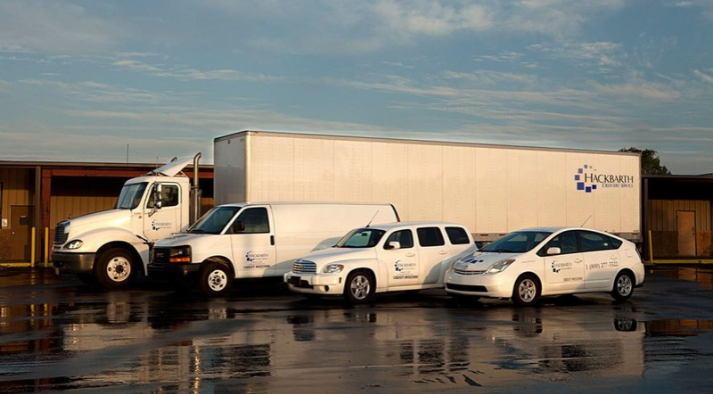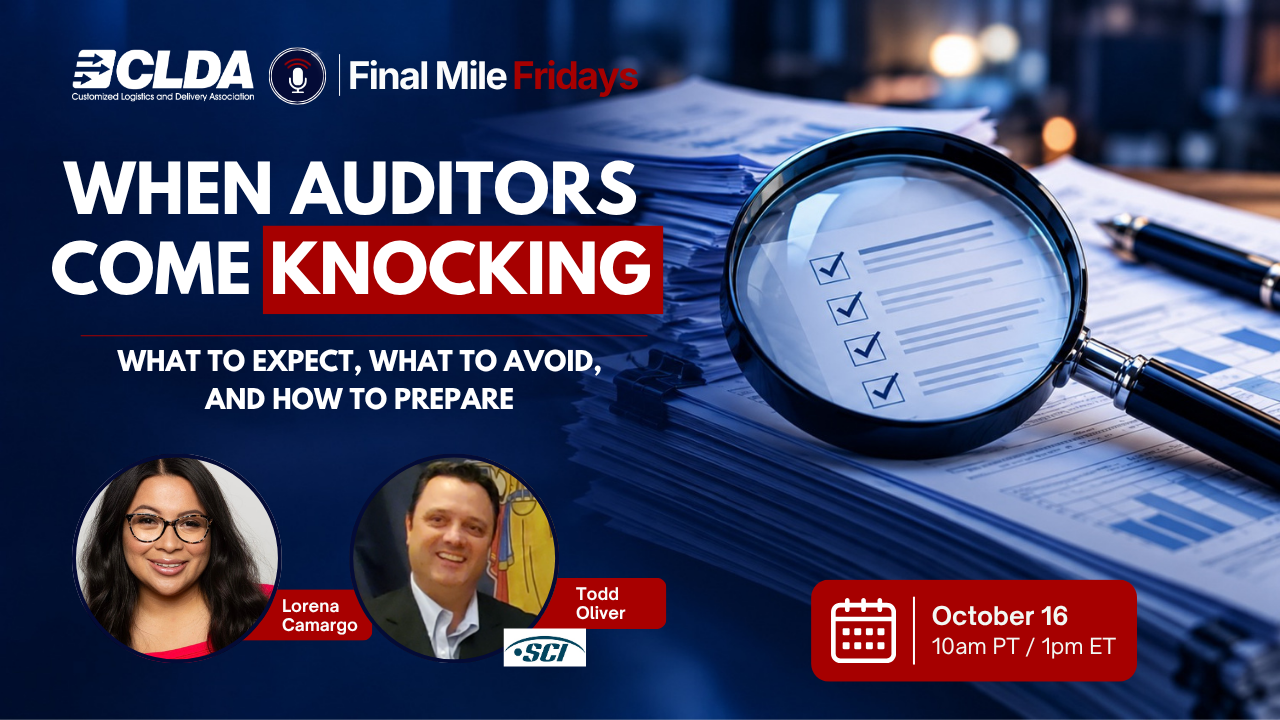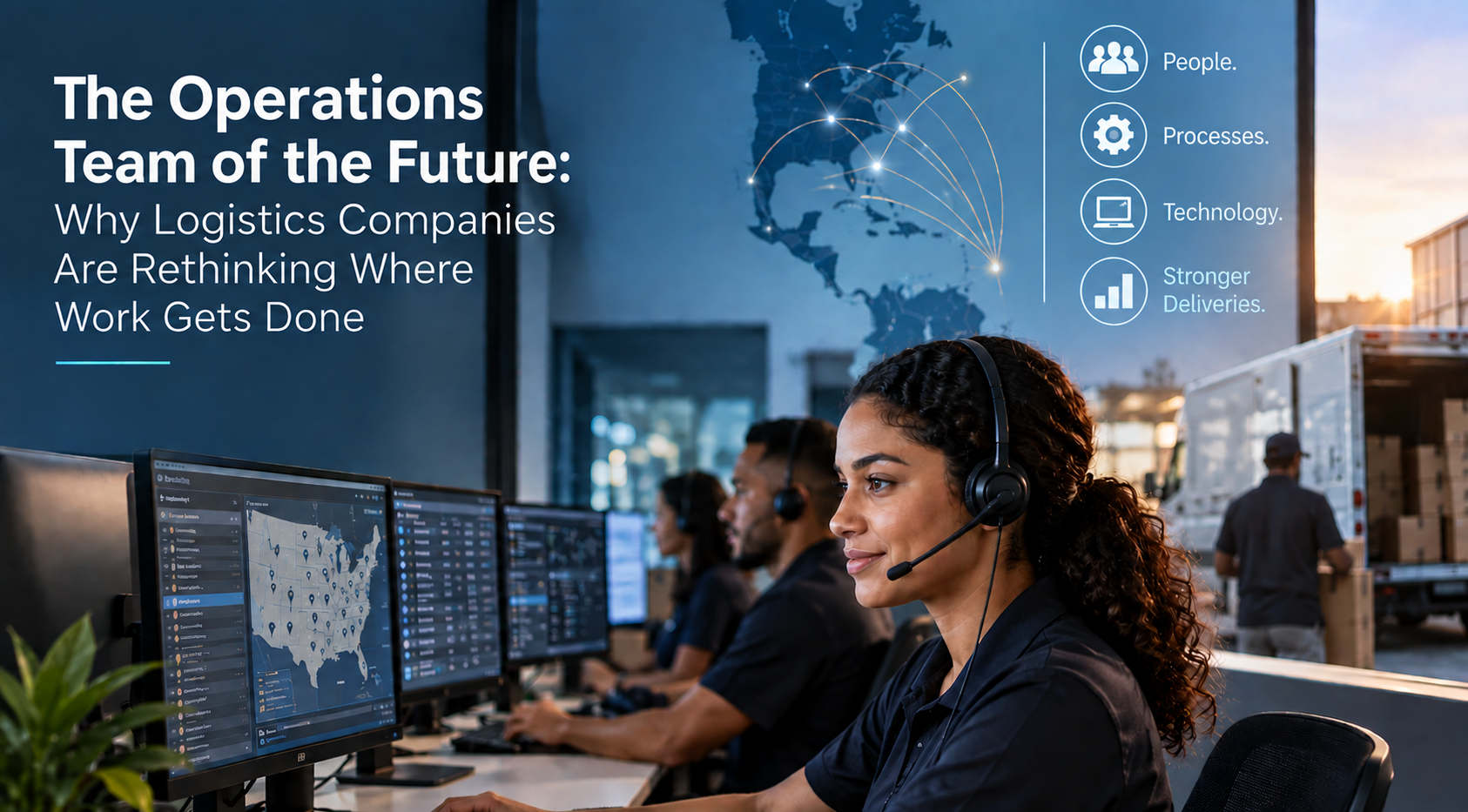


CLDA Members are encouraged to share news about their company. CLDA may share on social media, in newsletters or the Customized Logistics & Delivery Magazine.
Ready to share your news with CLDA or the industry media? Learn from these tips and tricks on how to get noticed.
Fall is officially here, but things are heating up here at CLDA. In a little over a week we will be in Scottsdale Arizona for the next installment of our in-person regional networking series – CONNECT AZ. Join CLDA and Openforce on October 8, 2026 as we take over Sophia’s Kitchen for a great night of networking and education.
A little over two weeks ago we officially launched registration for the 2027 Final Mile Forum (FMF27) which will be held February 10-12 at the Hilton Orlando Lake Buena Vista in Orlando, FL. We’ve lowered the price of registration since last year and come up with an extra special offer that’s almost too good to be true. Join CLDA or renew your membership and register for FMF27 by November 30,2026 and save a total of $700 off of the non-member price.
Our staff has been hard at work alongside the FMF27 Committee, Education Committee, Marketing Committee and Shipper Task Force to make this year’s event something truly special.
2027 marks CLDA’s 40th anniversary, and we’re building a Final Mile Forum worthy of the occasion. FMF27 will bring together the people, ideas and opportunities that move the final-mile industry forward, with an expanded lineup of education, new structured networking experiences and more ways to connect with the partners who can help grow your business. From entering new markets and verticals to building stronger relationships with carriers, shippers and industry partners, this year’s Forum is being designed around creating real opportunities for our members.
For our Affiliate members, sponsors and industry partners, we’re also rethinking what sponsorship can look like. New year-round partnerships, event packages and standalone opportunities give your company more ways to stay visible, engage directly with attendees and put your brand at the center of the FMF27 experience. Go beyond a logo on a sign. Put your brand behind one of our signature pre-conference events, like the high-energy Fastest Courier Challenge or our second annual Women in Logistics Brunch. Create a destination attendees will seek out with experiences like the Paws & Relax Puppy Lounge or the Final Mile Rest Stop Massage Lounge. These opportunities are designed to create interaction, generate conversation and give attendees a reason to remember who made the experience possible.
With new programming, new ways to connect and plenty of surprises planned for our 40th anniversary, FMF27 is shaping up to be a Final Mile Forum you won’t want to miss.
Michael Wright
CLDA Executive Director
Are you joining us in Orlando?
Final Mile Forum 2027 will be here before we know it, and I’m hoping to see as many of our CLDA members there as possible.
And right now, CLDA members have a great opportunity to make plans early and save. Members who renew their CLDA membership and register for FMF by November 30 can take advantage of a special $995 registration rate.
As we prepare for Orlando, I’ve been thinking a lot about the conversations we need to be having as an industry.
Running a final mile business has never been simple. But lately, the questions we’re asking as business owners have changed.
It’s no longer just: How do we get more business?
It’s: Are we ready for the business when it comes? Are our margins where they need to be? Are we managing risk as we grow? Are we keeping up with compliance? Are we using our data to make better decisions?
These are questions I’m thinking about in my own business, and I know from conversations with many of you that I’m not alone.
That’s one of the things I’ve enjoyed most about CLDA Final Mile Fridays. These conversations have given us an opportunity to hear different perspectives, ask better questions and learn from one another about the issues affecting our businesses.
And that’s exactly what I’m looking forward to continuing at Final Mile Forum 2027 in Orlando.
As valuable as our virtual connections are, there’s still nothing quite like bringing the CLDA community together in person. FMF is our opportunity to learn from one another, build new relationships, reconnect with longtime friends and have conversations that can help us build stronger businesses and a stronger industry.
So if Orlando is on your calendar, renew your CLDA membership and register for FMF by November 30 to lock in the special $995 member rate.
I’m looking forward to seeing you there.
See you in Orlando!
Lorena Camargo
CLDA President
Learn more and get involved with CLDA today!
CLDA Final Mile Fridays with Lauren King, CXT Software
For experienced final mile carriers, healthcare logistics can look like a natural opportunity for growth.
You already know how to manage time-sensitive deliveries. You have drivers, dispatchers, technology and operational processes in place. How different can delivering for a healthcare customer really be?
The difference is what’s at stake when something goes wrong.
A missed retail delivery may result in an unhappy customer and a redelivery. A missed medical delivery could delay medication, compromise a specimen or potentially affect a patient’s care.
That changes what healthcare organizations expect from their transportation partners.
On a recent episode of CLDA Final Mile Fridays, Lauren King of CXT Software joined us to discuss what it takes to build a healthcare-ready courier operation and why carriers shouldn’t look at compliance simply as another requirement to satisfy.
Here are some of the biggest takeaways.
Healthcare customers aren’t simply hiring a company to move something from Point A to Point B.
They may be entrusting a carrier with medications, specimens, vaccines, medical devices, temperature-sensitive materials or other critical shipments.
If something goes wrong, the consequences can extend far beyond a service failure.
A patient could be waiting at home for medication that needs to be administered by a nurse. A specimen may need to reach a laboratory within a specific timeframe. A temperature excursion could compromise a shipment.
That responsibility changes the relationship between the healthcare organization and its courier.
King explained that healthcare organizations often view their transportation providers as an extension of their own brand and service commitment. They want confidence that the carrier representing them can consistently execute according to their standards.
In healthcare logistics, you’re not just delivering a package. You’re becoming part of the healthcare organization’s operation.
Anyone who has responded to a healthcare RFP knows the questions can be extensive.
Chain of custody. Information security. Training. Documentation. Quality processes. Incident response. Driver qualifications. Insurance. Technology.
Why do healthcare organizations need to know so much about a transportation provider?
Because each of those areas can become a point where a logistics failure creates a larger regulatory, legal, financial or patient safety risk.
Ultimately, King said much of what healthcare organizations are trying to determine comes down to one thing: predictability.
Can they trust the carrier to follow the same processes on its worst day that it follows on its best?
No transportation operation is perfect. Traffic happens. Vehicles break down. Drivers make mistakes. Deliveries can be delayed.
Healthcare organizations know that.
What they want to understand is what happens next.
Do you have an escalation process? Is the customer notified? Is there a backup driver? Can you document what happened? Can your operation respond consistently when something doesn’t go according to plan?
The goal isn’t to convince a healthcare customer that nothing will ever go wrong. It’s to show them you’re prepared when something does.
One of King’s strongest pieces of advice for carriers was to change the way they think about compliance.
Too often, compliance is treated defensively.
Have the right policies so you can pass an audit. Maintain the required certifications. Avoid a finding. Check the boxes on the RFP.
King suggested carriers take a different approach:
“Don’t use compliance as defense. Use it as offense.”
Instead of waiting for a prospective customer to ask about your compliance program, make it part of your value proposition.
Show them how you qualify drivers. Explain how you protect chain of custody. Demonstrate how exceptions are documented and escalated. Show how your technology helps ensure that the right driver is assigned to the right delivery.
Having policies isn’t enough.
Healthcare customers increasingly want evidence that those policies are actually embedded in the operation.
Compliance shouldn’t simply help you keep healthcare business. Done well, it can help you win it.
It’s easier than ever to create policies and procedures.
But having a document that says what should happen isn’t the same as having an operation that makes sure it happens.
That’s where technology becomes especially important.
Consider driver qualifications.
A driver who is qualified to deliver tires isn’t automatically qualified to transport every type of healthcare shipment. Depending on the work, a driver may need specific training, certifications or customer-required credentials.
Technology can help match those qualifications to individual jobs and prevent assignments from going to drivers who don’t meet the necessary requirements.
It can also create a system of record.
When a healthcare customer conducts an audit and asks for driver certifications, proof of delivery, chain-of-custody information or other documentation, the carrier should be able to retrieve that information quickly.
A policy establishes the standard. Technology can help enforce it and prove that it was followed.
Healthcare logistics isn’t limited to the largest transportation companies.
Regional and smaller carriers can compete, but the time to prepare isn’t when a healthcare RFP suddenly lands in your inbox.
King encouraged carriers interested in the space to start doing the work now.
Learn the compliance requirements. Review your policies and procedures. Understand what training and certifications may be required. Talk with your insurance broker about the commodities you plan to transport. Evaluate whether your technology can support the necessary operational controls and documentation.
Insurance is particularly important because “medical logistics” covers a wide range of transportation.
Specimens, medications, medical devices, organs, radiopharmaceuticals and temperature-sensitive materials can each introduce different requirements and risks.
A carrier shouldn’t assume that having a transportation insurance policy means every type of healthcare shipment is automatically covered.
The more specialized the opportunity becomes, the more important it is to understand exactly what you’re agreeing to transport and what additional requirements may apply.
Prepare before the opportunity arrives so you’re ready when it does.
Carriers interested in healthcare logistics don’t have to figure everything out on their own.
King encouraged operators to talk with other carriers already working in the space, technology providers, insurance professionals and other industry resources.
The CLDA community can be especially valuable here.
A carrier in California, for example, may be able to call another CLDA member in Florida or New York who isn’t a direct competitor but has experience with the same type of healthcare delivery.
Ask what they’ve learned. What surprised them? What did healthcare customers require? What would they put in place differently if they were starting today?
Those conversations don’t replace your own research or professional guidance, but they can help you identify questions you may not have known to ask.
Don’t wait until you win healthcare business to start learning how healthcare logistics works.
Healthcare logistics technology is also continuing to evolve.
Over the next several years, King expects healthcare organizations to want greater connectivity between systems and more real-time information from transportation partners.
Temperature-controlled transportation is one example.
Instead of discovering after a delivery that a shipment experienced a temperature excursion, connected sensors could provide real-time information showing that a shipment is trending toward an unacceptable temperature.
That gives the carrier an opportunity to act before the shipment is compromised.
The same idea could apply to proof of delivery.
Rather than discovering during an audit that a driver submitted an unusable photo, technology using computer vision could potentially recognize the problem when the photo is taken and ask the driver to capture another image.
The distinction is important.
The next generation of healthcare logistics technology won’t simply document what went wrong. It will increasingly help carriers prevent something from going wrong in the first place.
Healthcare logistics can be an attractive growth opportunity for final mile carriers, but entering the market requires more than adding “medical courier” to a capabilities sheet.
Healthcare organizations are looking for transportation partners they can trust with high-stakes deliveries.
That means carriers need the right processes, training, technology, insurance, documentation and contingency plans already in place.
Start learning before the RFP arrives. Talk to carriers already doing the work. Understand the requirements. Evaluate your technology. Review your insurance. Build the operational controls.
And when you’re ready to pursue the business, don’t hide all of that preparation behind the scenes.
Make it part of the reason the customer should choose you.
Don’t just tell healthcare customers you’re compliant. Show them why your operation can be trusted.
To learn more about CXT Software, please visit cxtsoftware.com.
Watch the full CLDA Final Mile Fridays conversation with Lauren King of CXT Software for more on healthcare logistics, compliance, technology, driver qualifications, preparing for healthcare opportunities and what’s coming next for medical courier operations.
Watch full conversation on YouTube.
CLDA Final Mile Fridays brings together industry leaders and experts for practical conversations about the issues affecting final mile businesses. Follow CLDA for upcoming episodes and conversations designed to help move the final mile industry forward.
The information shared in this article and the accompanying Final Mile Fridays conversation is intended for general educational purposes and should not be considered legal or insurance advice. Companies should consult with their own insurance, legal and risk-management professionals regarding their specific operations.
CLDA Final Mile Fridays with Richard Whitlock, President of CX Logistics
For many local and regional final mile carriers, business development means finding more shippers.
But there’s another source of business carriers shouldn’t overlook: third-party logistics providers (3PLs).
National 3PLs are actively pursuing business across the country. When they win that business, they need strong local and regional carriers to help execute it. For carriers, those relationships can open the door to larger opportunities without requiring them to build a national footprint of their own.
On a recent episode of CLDA Final Mile Fridays, Richard Whitlock of CX Logistics shared what his company looks for in carrier partners and how regional carriers can position themselves for more opportunities.
Here are some of the biggest takeaways.
There’s value in developing direct relationships with shippers, but pursuing large national accounts requires resources that many regional carriers may not have internally.
A national 3PL may already have the sales team, customer relationships, technology and infrastructure needed to pursue and manage those accounts.
CX Logistics, for example, has a national sales team of approximately 15 people pursuing business across the country. As those efforts create opportunities in different markets, CX relies on regional carrier partners to execute the work locally.
That creates another path to growth.
Instead of trying to build operations everywhere, carriers can focus on being exceptional in the markets they already serve while developing relationships with 3PLs that have broader reach.
You don’t necessarily need a national footprint to participate in national business. You need the right partnerships.
When a 3PL selects a carrier, it is trusting that company to execute commitments the 3PL has already made to its customer.
That means the decision involves more than simply finding someone who can move the freight.
When CX evaluates potential carrier partners, it considers factors including:
Size isn’t necessarily the deciding factor.
A smaller regional carrier with the right capabilities may be a better fit than a larger company that can’t successfully execute the specific scope of work.
For carriers looking to attract 3PL business, the opportunity is to demonstrate not only what you can deliver, but how reliably your organization can support the larger customer relationship behind that delivery.
Price matters. A 3PL still has to develop a competitive solution that can win the shipper’s business.
But the lowest rate doesn’t automatically win.
When several qualified carriers are relatively close in price, CX considers which carrier it believes can best execute the work. Financial stability also matters.
Pricing an opportunity too aggressively may help win the business initially, but if the rate isn’t sustainable, it can create problems later for the carrier, the 3PL and ultimately the customer.
The goal isn’t simply to win the business. It’s to build business that everyone can sustain.
Winning the first opportunity is only the beginning.
There is a difference between being a carrier that receives work from a 3PL and becoming a partner the 3PL actively wants to grow with.
Performance, technology, customer service and communication all help build that trust.
And nothing tests a partnership quite like something going wrong.
A driver gets a flat tire. A delivery is delayed. An instruction gets missed. Problems happen in transportation.
A strong carrier partner communicates quickly, provides accurate information, is transparent about what happened and, whenever possible, brings a solution.
That matters because the 3PL has its own customer waiting for answers.
The same principle applies when things are going well. An initial opportunity might involve only one route, customer or market. Consistently execute the work, communicate well and make it easy for the 3PL to trust you with more.
CX has seen carrier relationships grow from one location into additional cities or states.
Do a great job with the business you have, and you give your 3PL partner a reason to look for more business you can handle.
If 3PLs can be a source of new business, carriers need to make sure those companies know who they are before an opportunity comes along.
When CX needs a carrier partner in a market, Whitlock said the company turns to the CLDA network first.
For CX, that isn’t simply about finding a company in a directory. Relationships and industry involvement matter.
Meeting other operators face-to-face gives 3PLs and carriers the opportunity to understand each other’s businesses and capabilities before there’s an immediate piece of business on the table.
Whitlock also noted that seeing a carrier invest its time and resources in CLDA and attend events such as the Final Mile Forum can carry weight when CX is evaluating potential partners.
That doesn’t replace due diligence. Carriers still need the right capabilities, technology, financial stability, service and pricing.
But when a 3PL suddenly needs coverage in your market, there’s an advantage to already being someone they know and trust.
Don’t wait until you need business to start building the relationship.
Working with 3PLs doesn’t mean carriers should stop pursuing shippers directly.
It means adding another channel to the business development strategy.
Get to know the 3PLs that are selling nationally and looking for reliable regional partners. Understand what they need. Make sure they understand your capabilities. Build those relationships before the opportunity exists.
Then, when the first opportunity comes, don’t simply treat it as another piece of business.
Treat it as an opportunity to become the carrier they want to call again.
Your next major opportunity may not come directly from a shipper. It may come from a 3PL that already has the customer and needs the right carrier in your market.
Will they know who to call?
Watch the full CLDA Final Mile Fridays conversation with Richard Whitlock of CX Logistics for more on building successful 3PL relationships, what CX looks for in carrier partners, pricing, communication and turning one opportunity into more business.
Watch the full conversation on YouTube.
CLDA Final Mile Fridays brings together industry leaders and experts for practical conversations about the issues affecting final mile businesses. Follow CLDA for upcoming episodes and conversations designed to help move the final mile industry forward.
The information shared in this article and the accompanying Final Mile Fridays conversation is intended for general educational purposes and should not be considered legal or insurance advice. Companies should consult with their own insurance, legal and risk-management professionals regarding their specific operations.
Michael Wright, Executive Director – Customized Logistics and Delivery Association
For months, CLDA has been closely following New York City’s Intro 0518-2026, a proposal that could fundamentally change the relationship between businesses, warehouses and the third-party delivery companies they rely on.
Now, a similar fight is developing more than 700 miles away.
Chicago’s Delivery Protection Act, Ordinance O2025-0018778, is scheduled for a subject-matter hearing before the Chicago City Council on September 15. Like the New York proposal, supporters have framed the measure largely around Amazon and its Delivery Service Partner model. But the language and potential impact extend well beyond a single company. The proposal would regulate last-mile delivery facilities and restrict subcontracted delivery arrangements. The Teamsters, which are advocating for passage, similarly describe the Chicago proposal as requiring licenses for last-mile delivery facilities and prohibiting certain subcontracting practices. Read more at: (PublicNow) (open link in new tab)
For CLDA members, that distinction matters.
It is easy to hear “Amazon DSP legislation” and assume these proposals only affect one very large retailer.
That is not what concerns CLDA.
The final-mile industry is built around business-to-business partnerships. Retailers, healthcare systems, manufacturers, distributors, e-commerce companies and countless other shippers rely on experienced third-party carriers to perform delivery work they either cannot or do not want to operate internally.
New York’s Intro 518, as currently written, could significantly restrict that model by requiring certain warehouse and delivery functions to be performed by employees of the last-mile facility operator rather than by a third-party delivery company. As CLDA has previously explained, that can create problems even for delivery companies whose drivers are already W-2 employees. (CLDA)
Chicago raises many of the same concerns. The draft ordinance discussed by CLDA’s Government Affairs Committee would potentially require workers serving certain last-mile warehouses to be employees of the warehouse owner or operator while establishing additional licensing, recordkeeping, safety, bonding and fleet requirements.
The practical question for our industry is therefore much larger:
Should a shipper be prohibited from contracting with a legitimate, professional delivery company simply because a city decides that the delivery function must be brought in-house?
For CLDA, that is where these proposals become particularly concerning.
As of CLDA’s September 3 Government Affairs Committee meeting, Intro 518 had not yet been placed on the September New York City Council calendar. The committee heard that significant pressure continues on both sides of the issue and that preventing a vote during the current session remains an important objective.
CLDA continues to support the New York Delivers Coalition, a group of delivery service partners, businesses and workers opposing Intro 518 and advocating for an approach that protects workers without dismantling the city’s existing last-mile delivery network. The coalition says proposed restrictions could put local delivery businesses and thousands of jobs at risk.
The coalition is also expanding its grassroots outreach to businesses and individuals that rely on the delivery network, including tools that allow participants to contact New York City Council members directly. CLDA is encouraging members—particularly those doing business in New York—to participate.
Take Action with the New York Delivers Coalition (Open link in new tab)
One of CLDA’s warnings about Intro 518 has been that a policy adopted in one major market can quickly become a model for others.
Chicago is an important reminder that this concern is not theoretical.
The Chicago Delivery Protection Act is now headed for a September 15 subject-matter hearing, with organized labor actively urging the City Council to advance it.
During CLDA’s Government Affairs Committee discussion, members also raised the possibility that similar concepts could eventually appear in other large cities. Reports concerning Los Angeles and San Francisco remain unconfirmed, but the emergence of Chicago after New York reinforces the need for national monitoring.
That is particularly important for companies operating in multiple jurisdictions.
Imagine running delivery operations in five cities and having five different rules governing whether your customer is legally permitted to outsource its deliveries.
Or imagine a healthcare provider, retailer or manufacturer being told that it must build an internal delivery workforce even though an established local carrier already provides the service safely, professionally and efficiently.
These are not simply worker-classification questions. They go to the heart of whether businesses can continue using specialized third-party delivery providers at all.
CLDA supports responsible standards for worker safety, insurance, training, compliance and ethical business practices.
Those objectives do not require eliminating legitimate business relationships.
There is an important distinction between addressing bad actors and creating a regulatory structure that prevents responsible companies from providing outsourced delivery services altogether.
Our industry should be part of the conversation about improving safety and accountability. But policymakers should also understand that final-mile delivery is an interconnected network of shippers, carriers, independent businesses, employees and drivers.
Changing one part of that system can have consequences throughout the entire supply chain.
The Government Affairs Committee will be closely monitoring the September 15 Chicago hearing, including any amendments or exemptions that emerge.
We will also continue working alongside the New York Delivers Coalition to oppose Intro 518 and educate policymakers about its potential impact on legitimate delivery companies.
And these are only two of the issues CLDA is monitoring around the country.
Through our Logistics Legislation Monitor, members can follow state and federal developments affecting independent contractors, worker classification, freight brokers, employment law, delivery operations and other issues that can directly affect their businesses.
View the CLDA Logistics Legislation Monitor
The final-mile industry moves quickly. Increasingly, the policies governing it do too.
CLDA will continue working to make sure our members know what is coming and that our industry has a voice before those policies become law.
Michael Wright, Executive Director – Customized Logistics and Delivery Association
The debate over delivery regulation in New York and Chicago is often framed around Amazon. For CLDA members, however, the bigger issue is much more fundamental: whether businesses should still be allowed to hire professional third-party companies to perform their deliveries.
That distinction is at the center of CLDA’s concerns with New York City’s Intro 0518-2026 and the Chicago Delivery Protection Act, Ordinance O2025-0018778.
Both proposals have been promoted largely as efforts to address the Amazon delivery model. But during CLDA’s September Government Affairs Committee meeting, members emphasized that the potential impact reaches well beyond Amazon or its Delivery Service Partners.
The concern is the concept of a direct-hire mandate.
For many businesses, delivery is an important part of their operation, but it is not their core business.
A retailer sells products. A healthcare organization provides patient care. A manufacturer produces goods. A distributor manages inventory.
Instead of building an internal delivery department, those companies contract with professional courier and final-mile providers that already have the people, technology, vehicles, compliance systems and operational expertise necessary to perform the work.
In its simplest form:
Shipper / Customer
↓
Professional Courier or Final-Mile Provider
↓
Drivers and Delivery Personnel
That structure is fundamental to the customized logistics and delivery industry.
The courier company is not simply supplying labor. It may be managing routing, dispatch, customer service, technology, insurance, driver qualification, chain of custody, compliance, proof of delivery and the many other operational responsibilities that come with moving goods from one location to another.
The proposals being discussed in New York and Chicago raise concerns because certain delivery workers could instead be required to work directly for the warehouse owner or operator.
The model begins to look more like this:
Warehouse / Retailer / Shipper
↓
Direct Employees Performing Delivery
The independent delivery company can effectively disappear from the relationship.
During a recent CLDA Government Affairs Committee discussion, the issue was described as substantially broader than worker classification alone. Members emphasized that a requirement tying the delivery worker directly to the warehouse or customer could affect established third-party logistics companies regardless of how those companies classify their own workforce.
That is an important point.
A courier company could employ its drivers as W-2 employees and still be affected if the law requires those workers to instead become employees of the courier company’s customer.
Worker classification remains one of the most important issues facing the final-mile industry.
But a direct-hire mandate creates a different question:
Who is legally permitted to provide the delivery service?
Consider a retailer that contracts with a CLDA member to make same-day deliveries.
Today, the retailer can choose a professional delivery partner based on service, expertise, technology, geographic coverage, safety, price and performance.
Under a strict direct-hire mandate, the retailer could potentially be required to create its own delivery workforce instead.
That could mean:
For some very large companies, building that infrastructure may be possible.
For many other businesses, it may not be practical at all.
The final-mile industry exists precisely because delivery is often specialized.
A healthcare courier may understand specimen handling, chain of custody and time-critical transportation.
CLDA Final Mile Fridays with FMF27 Conference Chair, Andrew Brady
Three days away from your business.
Airfare. Hotel. Registration. And an inbox that’s probably still going to follow you to Orlando.
So what makes an industry conference worth it?
It’s a fair question, especially for small and midsize final-mile companies where the person attending the conference may also be the person customers call, employees depend on and operations still need when something goes wrong.
And with registration for the 2027 Final Mile Forum opening Monday, it’s a question worth asking now.
But maybe we’re asking the wrong question.
Instead of asking, “What am I going to get from this conference?” ask:
“What am I going to do with the opportunity of having three days outside my business?”
Because simply showing up doesn’t create ROI. What you do while you’re there does.
It’s tempting to measure networking by how many people you meet or business cards you collect.
But one strong relationship can be worth more than 50 introductions.
That’s especially true in final mile. Most carriers can’t be everywhere or do everything. Your customer may need a delivery in a market you don’t serve. A shipment may require capabilities you don’t have. A national opportunity may require reliable partners across multiple regions.
When that happens, who are you going to call?
The strongest networks are filled with people you trust enough to put in front of your customer.
So don’t just look for someone who can give you business today. Talk to the carrier from another market. Introduce yourself to the new attendee. Sit with someone you don’t know at breakfast.
Build the network your business may need tomorrow.
Most of us walk into a conference knowing what we’re looking for: a customer, a partner, a solution to a problem or maybe a new piece of technology.
But some of the most valuable opportunities are the ones you didn’t know to look for.
Maybe you learn about a vertical you’ve avoided because it seemed too complicated. Maybe technology can now solve an operational problem you’ve simply learned to live with. Or maybe a conversation makes you stop and think, “Why aren’t we doing that?”
Walk the exhibit floor even if you’re not planning to buy anything. Ask what’s changed. Attend a session that’s slightly outside your wheelhouse. Talk to people you don’t already know.
You don’t know which conversation will matter yet.
Sometimes the value is discovering the question you hadn’t thought to ask.
For some business owners, three days away may be the hardest part.
Customers are still calling. Deliveries are still moving. Problems don’t conveniently stop because you’re at a conference.
But there’s value in getting far enough outside the day-to-day to think about what’s next.
You get to spend time with other business owners who understand the same pressures you do. You hear what they’re seeing, what they’re worried about and how they’re solving problems that may be sitting on your desk right now.
Growth requires more than getting better at running today’s deliveries. Leaders also need space to think about tomorrow’s business.
Sometimes working on your business requires physically stepping outside of it.
And the value doesn’t end when you get home.
Someone you meet in Orlando may not have an opportunity for you in February, but six months later, their customer may need coverage in your market. A conversation may lead you to explore a new service. An exhibitor you meet may have the solution you need a year from now.
The Final Mile Forum may last three days.
The relationships, ideas and opportunities that start there can last much longer.
So don’t measure the ROI only by how many sessions you attended or business cards you collected.
Ask yourself what you brought home:
One relationship. One idea. One new capability. One solution. One opportunity that changes what your company does next.
Because the goal isn’t simply to spend three days at a conference.
It’s to make those three days matter during the other 362.
What will those three days actually look like in Orlando?
Watch CLDA Final Mile Fridays: “Inside the Final Mile Forum,” featuring CLDA President Lorena Camargo and FMF27 Conference Chair Andrew Brady, for a behind-the-scenes look at what’s being planned for FMF27.
The 2027 Final Mile Forum is heading to Orlando, where CLDA will also celebrate its 40th anniversary.
Register here.
We’ll see you in Orlando.
CLDA Final Mile Fridays brings together industry leaders and experts for practical conversations about the issues affecting final mile businesses. Follow CLDA for upcoming episodes and conversations designed to help move the final mile industry forward.
The information shared in this article and the accompanying Final Mile Fridays conversation is intended for general educational purposes and should not be considered legal or insurance advice. Companies should consult with their own insurance, legal and risk-management professionals regarding their specific operations.
Some of the greatest value in CLDA comes from the connections we make with one another.
A conversation with another member can offer a new perspective. An introduction can lead to a new opportunity. And sometimes, simply hearing how someone else approached a challenge can help you think differently about your own business.
So this month, I have a simple challenge for every CLDA member: make one new CLDA connection.
Reach out to someone you haven’t met. Ask a question. Share an idea. Make an introduction. And if you’re not sure where to start, reach out to me or any member of our Board. We’re always happy to help.
Your network is one of the most valuable parts of your CLDA membership. Take advantage of it, and be part of what makes it valuable for someone else.
As always, thank you for being part of our community!
Lorena Camargo
CLDA President
Hear a few words from our CLDA President!
Learn more and get involved with CLDA today!
How Roslyn Ellerbee turned mentorship, relationships and involvement into business growth—and a commitment to help others do the same.
Roslyn Ellerbee’s story is one of growth, resilience and the power of community. A three-time entrepreneur, logistics industry leader, mentor and 2024 Enterprising Women of the Year Award recipient, Ellerbee has built her success by embracing opportunities, investing in relationships and helping others do the same. In this CLDA Education Feature, she reflects on the lessons that shaped her journey and shares her vision for the future of logistics.
For Ellerbee, the mission of helping people “manifest greatness” began with her own experiences. She understands what it feels like to have a vision but not always know the path forward. Along the way, mentors, relationships and access to knowledge expanded what she believed was possible and inspired her commitment to do the same for others. She believes greatness comes not only from having a vision, but from doing the work, building meaningful connections and continuing to grow.
Ellerbee’s entrepreneurial journey began with Express Errands, an errand-running company that evolved into Express Errands & Courier. Entering the logistics industry with limited experience required adaptability, curiosity and a willingness to learn. One lesson she continues to share is that business owners do not need to have every answer before they begin. They do, however, need to be willing to seek knowledge, ask questions and surround themselves with people whose experience complements their own strengths. That mindset is valuable in any business, but especially in logistics, where the industry moves quickly and continues to evolve.
Beyond logistics, Ellerbee has developed a reputation as a marketing strategist and brand builder through Dream Team Digital Marketing. She believes businesses are navigating one of the most significant shifts in marketing in decades. Traditional search engine optimization remains important, but AI-driven search and recommendation platforms are changing how customers discover and evaluate businesses.
She encourages business owners to pay attention to emerging concepts such as Generative Engine Optimization (GEO), Answer Engine Optimization (AEO), Large Language Model Optimization (LLMO) and AI Optimization (AIO), while continuing to focus on fundamentals that never go out of style.
For Ellerbee, successful marketing starts with understanding customers and meeting them where they are. Whether that is online, at industry events, through networking organizations, referrals or CLDA connections, businesses should focus on where their customers spend their time rather than simply where they are most comfortable marketing. She also encourages owners to view branding and marketing as investments rather than expenses, noting that strategic professional support can create stronger long-term results than trying to do everything alone.
A pivotal chapter in Ellerbee’s career began when she joined CLDA. Express Errands & Courier was already growing, but she was looking for something that revenue alone could not provide: access to people who had already navigated the challenges of the logistics industry. Through CLDA, she found mentorship, industry education, relationships and a community of experienced professionals willing to share what they knew.
What began as a search for mentorship eventually became a commitment to leadership and service. Ellerbee became more involved in the association, built authentic relationships and stepped into leadership, including serving on the CLDA Board of Directors and chairing the Marketing Committee. Her journey within CLDA reinforces one of the messages she shares most often: membership creates access, but involvement creates opportunity.
Her advice to members is simple: do not just join—get involved. Attend the events. Introduce yourself. Volunteer. Ask questions. Build relationships before you need something. The value of an association grows when members actively participate in the community around them.
Having benefited from mentors earlier in her career, Ellerbee is equally passionate about reaching back. Through CLDA, Big Brothers Big Sisters and her ongoing coaching efforts, she wants her experience to shorten the learning curve for others and help entrepreneurs see possibilities they may not yet see for themselves.
“Membership creates access, but involvement creates opportunity.”
As a logistics leader, Ellerbee sees technology as one of the forces reshaping the industry. She is particularly interested in artificial intelligence and emerging technologies that improve operational efficiency. AI automation, predictive analytics, robotics and route optimization can help businesses of all sizes operate more efficiently and compete more effectively. At the same time, she emphasizes that technology should enhance—not replace—the customer service and relationships at the heart of the industry.
For smaller courier companies in particular, she sees technology as an opportunity to level the playing field, provided leaders are willing to learn, adapt and use those tools strategically.
The message Ellerbee hopes fellow CLDA members take away is the value of community. Seeking mentorship, building authentic relationships and actively contributing to the organizations you join can accelerate both personal and business growth. Her own journey is proof that sometimes the right room, the right mentor and the willingness to get involved can change the direction of a business—and a career.
In the coming months, Ellerbee will be part of an Ask the Expert column where CLDA members can submit questions about community, business growth, marketing and more. Have a question for Roslyn? Reach out and join the conversation.
By Tina Angelone
Customer Experience & Marketing, Intact Insurance Accident & Health | CLDA Marketing Committee Member
CLDA Final Mile Fridays with Brian Jungeberg with Brown & Brown Insurance
Insurance is one of the largest expenses for many final mile companies. So naturally, when renewal comes around, much of the conversation centers on one question: What is this going to cost us?
But the better question may be: What is our operation telling an insurance underwriter about our business?
The way a company hires and manages drivers, responds to safety issues, uses technology and handles growth all influence how an underwriter evaluates risk. Those same practices also say a lot about how well the business is being run.
That connection was at the center of a recent CLDA Final Mile Fridays conversation with Brian Jungeberg of Brown & Brown, who has spent more than 23 years working with final mile delivery companies on insurance and risk management.
The discussion went beyond policies and premiums to explore what carriers can do operationally to become stronger risks and, in the process, stronger businesses.
Here are some of the biggest takeaways for final mile carriers.
Most transportation companies have safety policies, procedures and training. But having a safety program and building a safety culture aren’t necessarily the same thing.
The difference often shows up when following those policies requires a difficult decision.
Consider a productive, dependable driver who begins accumulating motor vehicle violations. Losing that driver may create an immediate operational challenge, but continuing to overlook unsafe behavior can create a much bigger risk.
A true safety culture means establishing standards and being willing to enforce them, even when it’s inconvenient.
For underwriters, driver records, training and safety procedures can provide insight into how seriously a company approaches risk. But documents only tell part of the story.
The strongest safety program is the one that’s actually practiced.
Cameras, telematics, GPS and driver-monitoring systems have become increasingly common across transportation. But simply installing them doesn’t automatically make an operation safer or guarantee lower insurance costs.
What matters is what happens next.
If technology identifies speeding, distracted driving or another unsafe behavior, does someone review it? Is the driver coached? Is corrective action taken? Are recurring patterns addressed?
Jungeberg raised an important consideration: collecting safety information and repeatedly failing to act on it can potentially create additional exposure.
At the same time, these tools can be extremely valuable when used properly. Camera footage and telematics data can help carriers understand what happened during an incident and may even help demonstrate when a driver was operating safely.
The value isn’t simply in having the technology. It’s in what you do with the information it provides.
Landing a major new customer is something to celebrate. But rapid growth can also expose weaknesses in an operation.
A new account may suddenly require more drivers, vehicles and routes. When the pressure is on to meet a customer’s expectations, it can become easier to compromise on hiring standards, training or safety processes.
From an underwriting perspective, rapid increases in drivers or vehicles naturally create questions. What caused the growth? How is the company supporting it? What additional safety and operational infrastructure has been added?
Jungeberg also pointed out an interesting distinction between growth from an existing customer and taking on entirely new business. New accounts can introduce unfamiliar routes, requirements and exposures.
For carriers pursuing growth, the question shouldn’t only be “Can we handle the additional volume?”
It should also be: “Can our people, systems and processes support it safely?”
And as your operation changes, your insurance broker should be part of the conversation. Major new accounts, fleet expansion or new service lines can change your risk profile. Those conversations shouldn’t necessarily wait until renewal.
One of the most valuable ideas from the conversation was that risk management doesn’t have to stay in the back office.
It can become a competitive advantage.
When a customer selects a final mile carrier, that customer is taking on risk, too. They want confidence that their freight will be handled properly, drivers are qualified, appropriate procedures are being followed and their transportation partner is prepared when something goes wrong.
That creates an opportunity for carriers.
Being able to explain your safety practices, training, compliance procedures, technology and insurance program can help demonstrate why your company is a stronger transportation partner.
The same operational discipline that gives an underwriter confidence can give a prospective customer confidence, too.
For carriers pursuing sophisticated customers or specialized verticals, risk management can become part of the value proposition rather than simply another cost of doing business.
Not every major risk facing a final mile company happens on the road.
When asked what emerging risks transportation companies should be watching, Jungeberg pointed to cybersecurity, fraud and deception, particularly as criminals become more sophisticated in their use of technology and AI.
Today’s final mile companies rely on technology for dispatch, payments, customer communication, routing and driver management. That connectivity creates efficiency, but it also creates exposure.
For business owners accustomed to thinking about risk in terms of vehicles, drivers and cargo, cybersecurity increasingly deserves a place in the conversation as well.
Insurance premiums will always matter. But focusing only on the cost of coverage can cause carriers to miss the bigger picture.
Good hiring practices. Driver accountability. Training. Technology. Safety. Compliance.
These aren’t simply things an insurance underwriter wants to see. They’re characteristics of a well-run transportation company.
As Jungeberg emphasized during the conversation, safety culture wins.
When managing risk becomes part of how a company operates every day, the benefits can extend well beyond insurance. You can build a company that’s safer, stronger, better positioned to grow and more attractive to the customers you want to serve.
Better risk. Better business.
To learn more, contact Brian directly at b3@bbrown.com.
Want to go deeper? Watch the full CLDA Final Mile Fridays conversation with Brian Jungeberg of Brown & Brown for more on driver safety, claims, independent contractors, insurance strategy, rapid growth and the emerging risks final mile carriers should be watching.
Watch the full conversation on YouTube
CLDA Final Mile Fridays brings together industry leaders and experts for practical conversations about the issues affecting final mile businesses. Follow CLDA for upcoming episodes and conversations designed to help move the final mile industry forward.
The information shared in this article and the accompanying Final Mile Fridays conversation is intended for general educational purposes and should not be considered legal or insurance advice. Companies should consult with their own insurance, legal and risk-management professionals regarding their specific operations.