






CLDA Members are encouraged to share news about their company. CLDA may share on social media, in newsletters or the Customized Logistics & Delivery Magazine.

Ready to share your news with CLDA or the industry media? Learn from these tips and tricks on how to get noticed.

CLDA Staff
On November 10, CLDA was back in Washington, D.C. raising concerns about a policy fight that could have consequences far beyond New York City.
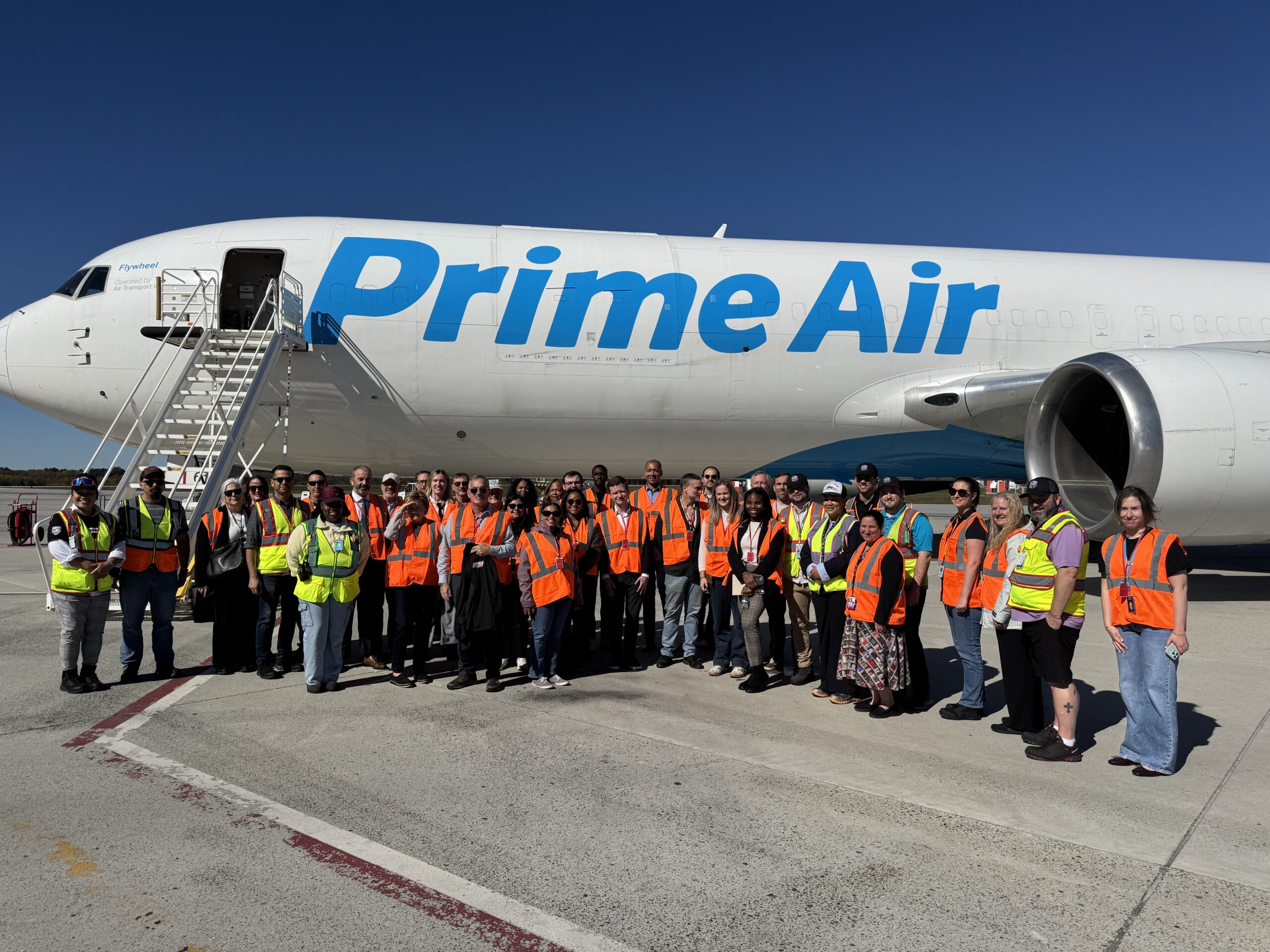
CLDA Past President Mark Chiusano and Executive Director Mike Wright were joined by Rich Meade of Prime Policy Group and longtime Government Affairs Committee member and final mile industry advocate Troy Cahill for a meeting with U.S. Department of Labor Wage and Hour Administrator Andrew B. Rogers.
The immediate issue was New York City’s proposed Intro. 518, the Delivery Protection Act. But the discussion quickly became about something bigger: who gets to decide how the final-mile delivery industry is structured, and what happens if cities across the country begin answering that question differently.
Intro. 518 would require covered delivery and warehouse workers to be directly employed by the last-mile facility operator and would largely eliminate third-party contracting for those services.
Much of the public debate has focused on Amazon and its Delivery Service Partner model. The problem is that the bill reaches much further. It could affect independent carriers, courier companies, owner-operators, brokers, logistics intermediaries and independent contractors across the final-mile industry.
For CLDA, that is the real concern.
This is not simply a worker classification debate. It is a proposal that could dictate how an entire segment of the transportation industry must operate and who is allowed to participate in it.
Transportation has long offered a path from driver, to owner-operator, to small-business owner. Those businesses create jobs, competition and opportunity, often for people who may not have followed a traditional college or corporate career path. Research examining Intro. 518 shows that the workers most exposed to disruption are heavily concentrated in New York City’s outer boroughs and include large numbers of minority and non-college-educated workers trying to build a living in one of the country’s most expensive cities.
That makes the potential consequences difficult to ignore.
Studies of Intro. 518 have modeled the loss of thousands of New York City jobs, higher delivery costs and the possibility that operators could move facilities outside the city rather than completely restructure their delivery networks.
And moving a warehouse does not make the package disappear.
The delivery still has to reach the customer. It simply starts farther away, potentially adding miles, congestion, emissions and cost while moving jobs out of the communities the legislation is intended to help.
CLDA also raised a broader federal concern.
There is a strong case to be made that New York City is moving into an area where local labor policy begins to overlap with federal authority over interstate transportation. Federal courts have already considered similar conflicts involving state independent contractor laws and rules that effectively dictated how delivery companies could structure their operations.
That matters because New York is not alone.
Chicago has already considered similar Delivery Protection Act legislation, and debates over subcontracting, intermediary businesses, joint employment and independent contractor relationships are appearing in other markets.
If that approach spreads, an interstate delivery company could face one operating structure in New York, another in Chicago and another somewhere else.
For an industry built around interstate commerce, that kind of city-by-city patchwork is a serious problem.
CLDA has spent roughly 25 years working with administrations of both parties on independent contractor policy. The rules have changed many times, but the association’s position has remained consistent: workers who are truly misclassified should be protected, while legitimate independent businesses and the opportunity for people to work for themselves must also be preserved.
There are real issues worth addressing.
Worker safety matters. Wage violations matter. Misclassification matters. Bad actors should be held accountable.
But those concerns should be addressed directly. They should not become a justification for eliminating legitimate transportation businesses, independent contractors or intermediary companies that play an essential role in moving goods throughout the country.
CLDA asked the Department of Labor to get involved before local employment mandates begin developing into a national model.
That is exactly why CLDA maintains an active presence in Washington.
Decisions being made today in New York, Chicago and other cities have the potential to reshape the customized logistics industry nationwide.
CLDA intends to make sure our industry’s voice is part of that fight.
Relevant Further Reading:
New York Times: Amazon Regulation and Mamdani
By David Douglas, CEO, Adlinc
For years, logistics companies built their operations around a relatively straightforward model: hire locally, train internally and add people as volume increased.
That model is becoming harder to sustain.
Final-mile operators are navigating rising customer expectations, tighter margins, recruiting challenges, technology changes and increasingly complex service requirements. At the same time, leaders are being asked to improve service without allowing overhead to grow at the same pace.
It raises an important question:
How do we build enough operational capacity to support the business without simply continuing to add overhead?
The answer may require us to rethink what an operations team looks like.
The Workforce Model Is Changing
The traditional conversation around external operational support focused heavily on cost. That conversation is evolving.
Companies are increasingly looking beyond their local hiring markets not simply to reduce labor expenses, but to gain access to talent, operational capacity, specialized skills and greater workforce flexibility.
For logistics companies, this can apply to functions such as dispatch and scheduling, track and trace, customer communication, exception management, order intake, POD management, billing documentation, data entry, recruiting and compliance administration.
These may happen behind the scenes, but they are not insignificant tasks. In many cases, they directly influence whether a shipment moves efficiently, whether an exception is resolved quickly and whether a customer receives the level of communication they expect.
Rather than asking, “What can we outsource?”, logistics leaders may benefit from asking a different question:
“Where should each part of our operation live?”
Not every function belongs outside the organization. But not every function necessarily needs to be performed by a locally hired employee either.
The opportunity is to determine which responsibilities require senior-level judgment or local market knowledge, which depend on real-time communication, and which repetitive but critical functions may be pulling employees away from customers, drivers, sales or higher-level decision-making.
This shifts workforce planning away from replacing people and toward designing the right operating structure.
Nearshore Support Creates Another Option
Historically, companies considering external support often looked toward large offshore markets located thousands of miles and multiple time zones away.
Nearshore markets offer another option.
For North American logistics companies, teams located throughout the Caribbean and Latin America can provide access to skilled professionals while operating within or close to U.S. business hours.
That alignment can be particularly valuable in logistics.
An exception that occurs at 2 p.m. needs attention at 2 p.m. A customer requesting an ETA expects an answer during their workday. A dispatcher managing a changing route needs support in real time.
When external professionals work alongside an internal operation during the same business day, the model can become less about handing work off and more about extending the existing team.
Jamaica is one market participating in this evolution. Its English-speaking workforce, proximity to the United States and cultural familiarity with North American business make it well positioned for operational and professional support.
However, location alone does not determine success. Training, supervision, technology, security, documented processes and industry knowledge remain critical.
Technology Is Changing the Work
Artificial intelligence and automation are also changing how operational teams are structured.
Technology can organize information, accelerate repetitive processes, identify patterns and flag potential problems. People are still needed to interpret exceptions, communicate with customers and drivers, verify information and make judgment calls.
A system may identify that a delivery is running late. Someone may still need to determine why, communicate with the appropriate parties, document the exception and help move the shipment toward resolution.
The operations team of the future will likely combine people, processes and technology, with each performing the work it is best suited to handle.
Industry Knowledge Will Matter More
As external workforce models mature, specialization will become increasingly important.
Logistics companies should expect more than access to available labor. The people supporting their operations need to understand the environment in which they are working.
A professional supporting a final-mile operation should understand that an ETA is more than a field in a system. They should understand routes, drivers, service levels, exceptions, PODs, customer expectations and the urgency that comes with a live delivery operation.
The strongest support models begin with training and operational understanding, not simply filling a seat.
Start With the Work, Not the Headcount
When evaluating workforce strategy, logistics leaders may benefit from starting with an operational assessment rather than deciding how many people they need.
Where are the bottlenecks? What work consistently falls behind? Which responsibilities pull managers away from higher-value activities? Where is overtime increasing? Which functions are difficult to cover during evenings, weekends, holidays or periods of increased volume?
And perhaps most importantly:
Where are customers or drivers waiting because the internal team simply does not have enough capacity?
The answer will not always be external support.
Sometimes the right solution is another local hire. Sometimes it is better technology. Sometimes it is a process change. And sometimes it makes sense to extend the internal team through specialized nearshore operational support.
For many organizations, the strongest model may ultimately include a combination of all four.
Build Flexibility Before You Need It
Operational capacity is difficult to build overnight.
A new customer comes onboard. Volume increases unexpectedly. A key employee leaves. Seasonal demand arrives faster than expected.
These moments often reveal weaknesses in a workforce model that were already there.
The better time to identify those vulnerabilities is before they become emergencies.
As we look toward 2027 and beyond, I believe successful logistics companies will increasingly separate the question of where someone works from the more important question of how effectively the work gets done.
The operations team of the future may span multiple locations. It may combine internal employees, specialized nearshore professionals and increasingly sophisticated technology.
But to the customer, none of that should matter.
They should simply experience a responsive, reliable operation that communicates well and delivers consistently.
That is ultimately the workforce strategy that matters most.
About the Author
David Douglas is the Chief Executive Officer of Adlinc Business Services. With decades of experience supporting transportation and logistics organizations across North America, he is passionate about helping businesses strengthen operations, improve efficiency, and build resilient teams that support long term growth.
Learn more at www.adlinc.com
CLDA Final Mile Fridays with Tom Jowers, ADL Final Mile
Imagine your biggest customer calls this afternoon with great news: They’re doubling their volume starting next week.
Do you celebrate, or do you panic a little?
Winning more business is exciting. But growth can also expose weaknesses that were easier to manage when a company was smaller. Processes get stretched. Owners become bottlenecks. Margins get overlooked. And a major customer can quickly become too large a percentage of the business.
On a recent episode of CLDA Final Mile Fridays, CLDA President Lorena Camargo sat down with longtime industry leader Tom Jowers to discuss what it really takes to build a business that is ready to scale.
Jowers has worked in logistics since 1992 and spent decades building and operating transportation companies, including serving as an operating partner at ADL before its sale to private equity in 2022. Today, he continues to serve as a regional president and assists with M&A activity.
His experience has given him a close look at what separates companies that simply get bigger from those that become stronger as they grow.
Revenue is one of the most visible signs of growth, but Jowers cautions owners against relying on the top line as their primary measure of success.
“I would rather own a $10 million company that’s making 15% in profit than a $50 million company that’s breaking even,” he said.
Revenue matters, but it only tells part of the story. Profitability indicates whether the business model is working, while cash flow determines whether the company can meet its obligations and continue investing in growth.
That same thinking should apply when evaluating new business.
Jowers recalled advice he heard years ago at a CLDA conference: “Not every customer is your customer.”
In customized logistics, every opportunity comes with different requirements. A new account may require additional routes, drivers, technology, management or infrastructure. Before chasing the revenue, operators need to understand whether the business fits their capabilities and whether they can service it profitably.
That is especially important when competing for RFPs.
Winning because you offered the lowest possible rate may increase revenue, but it doesn’t necessarily strengthen the business.
“We want to be the best-choice option, not the low-cost provider,” Jowers said.
Many final mile companies are built around highly involved founders and owners.
Customers know they can call them directly. Employees rely on them when a difficult decision needs to be made. The owner knows the customers, the routes, the people and the history behind nearly every part of the operation.
That involvement can be a tremendous asset, until the business reaches a size where every decision can no longer flow through one person.
Jowers admitted this was something he had to learn himself.
As ADL grew, trying to solve every problem and make every decision became unsustainable. If the team was always waiting for him, he became the bottleneck.
His test for business owners is simple:
Can you leave for two weeks without worrying that your business will collapse?
If the answer is no, the company may still depend too heavily on its owner.
The solution isn’t simply handing work to someone else. Jowers emphasized that true delegation means giving employees the authority, tools and accountability they need to succeed.
That also requires owners to accept that their managers may occasionally make a decision differently than they would.
Sometimes they will make mistakes. That is part of developing leaders.
“Sometimes the worst decision is not making a decision at all,” Jowers said.
When employees are empowered to act, the organization can move faster and the owner can spend more time focused on strategy, customers and business development instead of being pulled into every operational issue.
Every growing company seems to have a few people who can save the day.
It may be the dispatcher who remembers every route and customer requirement, the operations manager everyone calls when something goes wrong, or the owner who is available at all hours.
Those people are valuable, but a growing business cannot depend on individual heroes forever.
One of Jowers’ recommendations for companies preparing to scale is to “build systems instead of depending on heroes.”
Systems create predictability, something Jowers considers one of the defining characteristics of a strong business.
Customers should know what they are going to get. Employees should understand what is expected of them. Leadership should understand the company’s financial performance. And instead of constantly reacting to the same problems, the company should have processes designed to prevent them.
For final mile companies, where exceptions are part of daily operations, creating that consistency becomes even more important as volume increases.
Growth becomes much easier to manage when knowledge and decision-making live within the organization, not just inside the heads of a few key people.
A major customer can help transform a final mile company.
As the account grows, the provider may add routes, bring on contractors, hire employees, expand facilities and create new processes around that customer’s needs.
But there is a risk that comes with that success: customer concentration.
“If one customer makes up 99% of your business, that’s volatile,” Jowers said.
A customer can change providers, issue a new RFP, encounter financial difficulties or change its logistics strategy. When too much of the company depends on one account, losing that business can have an outsized impact on the entire organization.
That doesn’t mean turning down additional volume from a strong customer. It means understanding the risk and continuing to develop other accounts while that customer grows.
Customer diversification helps make sure the loss of one relationship doesn’t threaten everything the company has built.
The same thinking can apply to the industries a final mile company serves.
ADL built significant expertise in automotive logistics while also expanding into pharmaceutical, medical and other areas. But Jowers stressed that diversification shouldn’t mean chasing every possible opportunity.
The goal was to develop expertise in core areas rather than trying to become an expert in 15 different things.
For companies considering a new vertical, Jowers offered straightforward advice:
“Look at everything. Don’t say yes to everything.”
A new opportunity should make sense for the company’s capabilities, network and strategy.
Customized logistics is, by definition, customized. An opportunity that doesn’t immediately fit an existing network may still be worth exploring. But operators should understand what it will take to execute the business successfully before committing to it.
Strategic diversification can make a company more resilient. Trying to be everything to everyone can have the opposite effect.
For owners preparing their companies for the next stage of growth, Jowers’ advice comes down to several fundamentals:
There is no single formula for taking a final mile company from $10 million to $25 million or beyond.
But Jowers believes the fundamentals remain the same: Take care of your customers. Invest in your people. Know your numbers. Build systems. Take calculated risks. And stay humble enough to keep learning.
Every company will make mistakes along the way. What matters is whether those lessons are used to make the organization stronger.
Because the real test of growth isn’t how much new business you can win.
It’s whether your company is ready to handle it when you do.
As Jowers put it:
“Growth isn’t just about getting larger. It’s about getting better. And if you focus on getting better every day, the growth usually takes care of itself.”
__________________________________________________________________________
CLDA Final Mile Fridays brings together leaders from across the customized logistics and delivery industry to share practical ideas and real-world experience that can help members build stronger businesses and keep moving the final mile forward.
Join us every Friday at 10 a.m. Pacific / 1 p.m. Eastern on LinkedIn for a new conversation.
By David Douglas, Chief Executive Officer, Adlinc Business Services
Every logistics organization is under pressure to do more with less.
Rising labor costs, recruiting challenges, tighter margins, and increasing customer expectations are forcing logistics companies to rethink how they build their operations teams. At the same time, experienced dispatchers, customer service professionals, and administrative support staff are becoming increasingly difficult to recruit and retain, placing additional pressure on day to day operations.
While revenue growth remains important, growth alone is not always the answer.
One strategy that is often overlooked is rethinking how operational work is structured. For many organizations, that means expanding access to skilled talent beyond their local hiring market. The goal is not simply to reduce costs. It is to create a stronger, more scalable operation.
Ask most business owners what a dispatcher or customer service representative costs and the answer is usually a single number: salary.
But salary tells only part of the story.
Once payroll taxes, benefits, recruiting, onboarding, training, equipment, software, office overhead, and management time are factored in, a $55,000 employee can easily cost between $70,000 and $80,000 annually.
Understanding the fully loaded cost of a role helps leaders make better workforce decisions and evaluate operational investments more accurately.
Many process driven roles, including dispatch support, customer communication, track and trace, billing support, administrative functions, driver recruiting, and other operational support functions, can often be performed remotely without compromising service quality when supported by the right processes, accountability, and performance standards.
While cost savings often receive the most attention, operational flexibility often provides the greater long term advantage.
Consider a five person operations support team consisting of two dispatch coordinators, two customer service representatives, and one billing specialist. The figures below are hypothetical and intended to illustrate the model. Actual costs and savings will vary by company, role, and market.
Transitioning those roles to a nearshore workforce model could generate approximately $234,200 in annual operational savings, or more than $1.17 million over five years.
Put another way, a company operating at a 10 percent net profit margin would need to generate approximately $2.34 million in additional revenue to produce the same improvement in profitability.
For many organizations, improving operational efficiency is significantly easier and often less risky than generating millions of dollars in new sales.
For founder led businesses planning for the future, the conversation extends beyond annual cash flow.
Most logistics companies are valued using EBITDA multiples. At an illustrative 5x EBITDA multiple, sustained operational improvements of $234,200 annually could contribute to approximately $1.1 million in additional enterprise value, depending on market conditions, buyer assumptions, and the sustainability of those earnings.
Operational improvements do more than strengthen today’s business. They can also influence tomorrow’s valuation.
Expanding your workforce beyond your local market is not the right solution for every role, and it will not fix broken processes.
Success depends on clear workflows, defined service levels, measurable performance standards, and treating every team member as an extension of your organization.
When implemented thoughtfully, nearshore workforce solutions can help logistics organizations improve customer responsiveness, reduce recruiting pressure, strengthen business continuity, and build a more scalable operating model. Just as importantly, they allow leadership teams to spend less time recruiting for operational support roles and more time improving processes, strengthening customer relationships, and focusing on strategic initiatives that support long term growth.
The logistics organizations that will lead the next decade will not simply be those with the highest revenue. They will be the ones that build resilient operations, invest in scalable workforce strategies, and create the operational flexibility needed to adapt as the industry continues to evolve.
For logistics leaders, workforce strategy is no longer just an HR decision. It is a strategic business decision that directly influences customer experience, profitability, and long-term enterprise value.
About the Author
David Douglas is the Chief Executive Officer of Adlinc Business Services. With decades of experience supporting transportation and logistics organizations across North America, he is passionate about helping businesses strengthen operations, improve efficiency, and build resilient teams that support long term growth.
Learn more at www.adlinc.com
By Walter Cabrales, Chief Operating Officer, Truck Freedom.
Rising costs continue to be one of the biggest challenges facing the final-mile delivery industry today. In fact, industry research indicates that the final mile can account for up to 53% of total delivery costs, making it one of the most expensive segments of the supply chain.
From fuel and insurance to labor, maintenance, and equipment expenses, carriers are under constant pressure to improve efficiency while maintaining high service levels. At the same time, customers continue to expect faster, more reliable deliveries, further increasing operational demands.
Through conversations with carriers, fleet managers, owner-operators, and logistics professionals throughout the year, one theme consistently emerges: companies are looking for practical ways to lower costs without sacrificing performance. Truck Freedom participated in many of these discussions, including at ECA Marketplace 2026, where carriers and shippers shared perspectives on rising costs, Total Cost of Ownership (TCO), and operational efficiency.
A growing number of fleet operators are taking a closer look at Total Cost of Ownership (TCO) when evaluating their operations. Rather than focusing solely on acquisition costs, carriers are increasingly considering the long-term impact of fuel consumption, maintenance requirements, insurance expenses, downtime, driver productivity, and asset utilization.
Many are also examining operational processes that can influence overall costs, including loading and unloading efficiency, route planning, dispatch optimization, equipment utilization, and the use of technology to improve visibility across their operations.
While every fleet faces unique challenges, the industry’s focus appears to be shifting toward a broader view of efficiency. The goal is no longer simply to move more freight, but to move freight more profitably by maximizing the value of existing assets and resources.
Industry discussions throughout 2026 have highlighted the growing importance of flexibility, productivity, and operational efficiency as carriers navigate an increasingly competitive environment. Companies are exploring a wide range of approaches and innovations aimed at reducing downtime, improving utilization, and lowering the total cost of delivery operations.
There is no single answer to the cost challenges facing final-mile delivery. However, one thing is clear: understanding Total Cost of Ownership and continuously improving operational efficiency will remain critical priorities for carriers looking to stay competitive in the years ahead.